
1. Stray Coffee Grounds on the Basket Rim
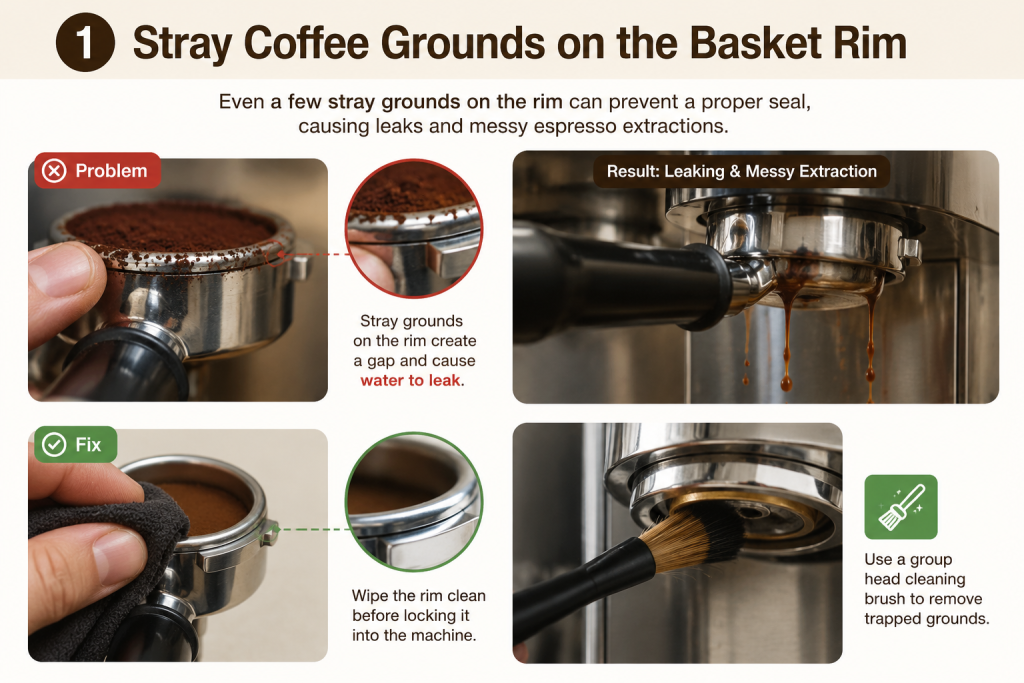
If you notice your espresso machine leaking around portafilter basket edges, check for the simplest culprit first: stray coffee grounds sitting on the top rim of your filter basket.
For your portafilter to seal properly, the stainless steel rim must press flush against the rubber or silicone group head gasket inside the machine. Even a few tiny stray grounds on the basket rim can create a microscopic gap, allowing pressurized hot water (up to 9 bars) to escape around the sides.
The Fix:
Always wipe the top rim of your portafilter clean with your thumb or a dry cloth after dosing and tamping, right before locking it into the machine.
Use a group head cleaning brush to sweep away trapped grounds from the group head brass ring.
Espresso Machine Leaking Around Portafilter? Easy Home Fixes
There are few morning moments more frustrating than launching your carefully prepped espresso extraction, only to watch hot water and coffee grounds spray out from the sides of your portafilter across the kitchen counter.
If your espresso machine is leaking around the portafilter, don’t panic. You aren’t necessarily looking at an expensive repair bill or a broken machine.
In fact, roughly 90% of portafilter leaks stem from three simple, routine physical issues that you can diagnose and resolve at home in less than ten minutes.
Here is your quick, step-by-step diagnostic guide to pinpointing the leakage cause and restoring a clean, leak-free shot.
(Note: If your coffee extracts smoothly without leaking but still tastes harsh, check out our guide on why your espresso tastes bitter and quick calibration tips!)
2. Overfilling the Filter Basket (Overdosing)
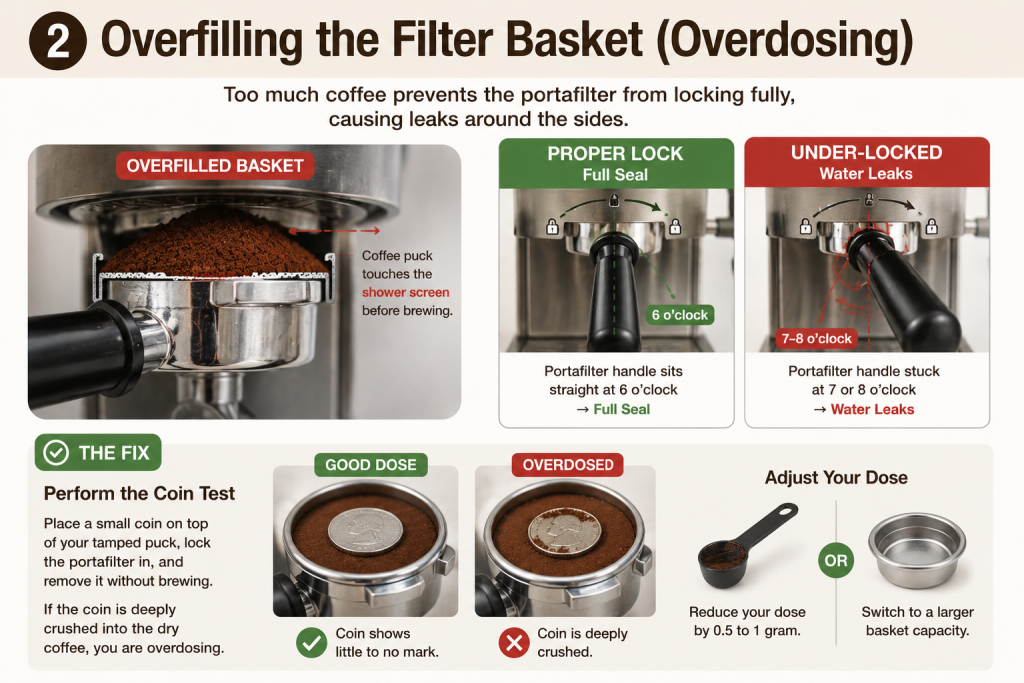
If you pack too much ground coffee into your filter basket, the coffee puck physically contacts the shower screen before you even hit the brew button.
When you force the portafilter handle into place against a wall of tightly packed coffee, you prevent the ears of the portafilter from locking fully to the proper 6 o’clock position.
Proper Lock: Portafilter handle sits straight at 6 o’clock -> Full Seal
Under-locked: Portafilter handle stuck at 7 or 8 o’clock -> Water Leaks
Perform the Coin Test: Place a small coin on top of your tamped coffee puck, lock the portafilter in, and remove it without brewing. If the coin is deeply crushed into the dry coffee, you are overdosing.
Reduce your dose by 0.5 to 1 gram, or switch to a larger basket capacity. Keeping your dose aligned with Specialty Coffee Association extraction standards ensures proper headspace between the coffee puck and the shower screen.
3. A Worn or Hardened Group Head Gasket
If your basket is clean and properly dosed, but water still streams down the sides of the portafilter during extraction, your group head gasket is likely due for replacement.
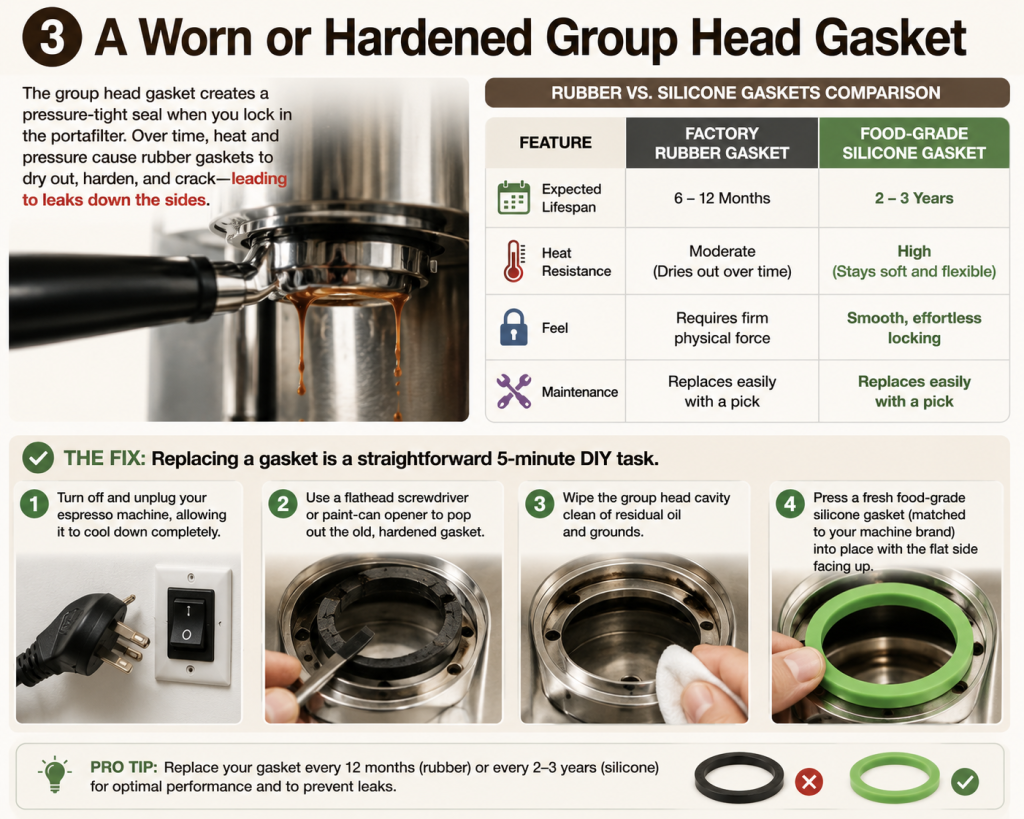
Inside the brew group, a flexible rubber or silicone ring creates a pressure-tight seal when you twist the portafilter in. Over months of exposure to high heat and pressure, traditional black rubber gaskets dry out, become brittle, and crack.
Rubber vs. Silicone Gaskets Comparison:
| Feature | Factory Rubber Gasket | Food-Grade Silicone Gasket |
| Expected Lifespan | 6 – 12 Months | 2 – 3 Years |
| Heat Resistance | Moderate (Dries out over time) | High (Stays soft and flexible) |
| Feel | Requires firm physical force | Smooth, effortless locking |
| Maintenance | Replaces easily with a pick | Replaces easily with a pick |
The Fix:
Replacing a gasket is a straightforward 5-minute DIY task:
Turn off and unplug your espresso machine, allowing it to cool down completely.
Use a flathead screwdriver or paint-can opener to pop out the old, hardened gasket.
Wipe the group head cavity clean of residual oil and grounds.
Press a fresh food-grade silicone gasket (matched to your machine brand) into place with the flat side facing up.
4. Under-Tightening the Portafilter Handle
New home baristas often worry about overtightening their equipment and accidentally under-lock the portafilter handle.
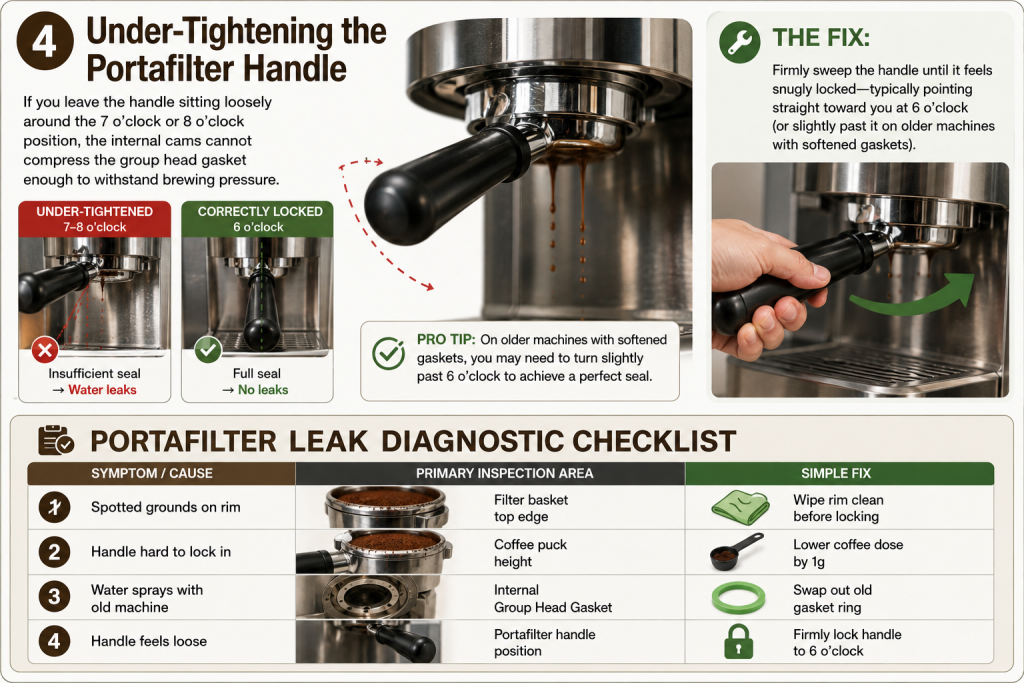
If you leave the handle sitting loosely around the 7 o’clock or 8 o’clock position, the internal cams cannot compress the group head gasket enough to withstand brewing pressure.
The Fix:
Firmly sweep the handle until it feels snugly locked—typically pointing straight toward you at 6 o’clock (or slightly past it on older machines with softened gaskets).
📊 Summary: Portafilter Leak Diagnostic Checklist
| Symptom / Cause | Primary Inspection Area | Simple Fix |
| Spotted grounds on rim | Filter basket top edge | Wipe rim clean before locking |
| Handle hard to lock in | Coffee puck height | Lower coffee dose by 1g |
| Water sprays with old machine | Internal Group Head Gasket | Swap out old gasket ring |
| Handle feels loose | Portafilter handle position | Firmly lock handle to 6 o’clock |
Frequently Asked Questions
How often should I replace my espresso machine group head gasket?
Standard rubber gaskets should be replaced every 6 to 12 months. Upgrading to a silicone gasket extends this maintenance interval to 2–3 years while providing a smoother seal.
Why is my new espresso machine leaking around the portafilter?
On a brand-new machine, leaking is rarely caused by a damaged gasket. It is almost always due to overdosing the coffee basket, leaving stray coffee grounds on the rim, or not locking the handle firmly into place.
The Verdict: Keep Your Machine Clean and Sealed
An espresso machine leaking around the portafilter is almost never a death sentence for your gear. By keeping the basket rim free of grounds, dosing correctly, and replacing the group head gasket every year or two, you’ll enjoy clean, leak-free espresso pulls every single morning.

